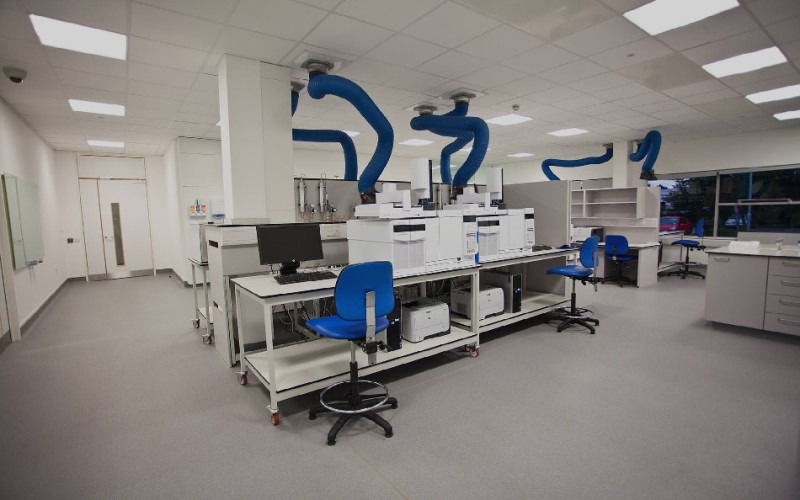
A double analytical lab bench is a type of laboratory furniture designed to provide a spacious and efficient workspace for two people conducting analytical experiments or work. These benches typically feature two workstations, often with integrated utilities and storage, and may be modular to allow for customization.
Here's a more detailed description:
Key Features:
Dual Workspaces:
The primary characteristic is the ability to accommodate two researchers simultaneously, increasing efficiency and collaboration.
Integrated Utilities:
These benches often include features like gas, water, and electrical outlets, as well as vacuum lines or compressed air connections, allowing for direct powering and operation of analytical instruments and equipment.
Modular Design:
Many double analytical lab benches offer a modular design, enabling customization to specific research needs or instrumentation requirements. This allows for the addition or rearrangement of shelving units, storage cabinets, and other accessories.
Materials and Construction:
Common materials include MS CRCA (Mild Steel Cold Rolled Close Annealed) with an epoxy powder coating, and other metals like steel or iron.
Dimensions and Ergonomics:
Standard height is often 750mm for sitting and 900mm for standing, according to ergonomic principles.
Storage Solutions:
Benches may include features like drawers, shelves, and cabinets for storing equipment, chemicals, and other materials.
Chemical and Heat Resistance:
Worktops are often made of epoxy resin or other materials resistant to chemicals, heat, and physical wear and tear.
ESD Protection:
Some benches are designed with ESD (Electrostatic Discharge) protection for sensitive electronic components.
Applications:
Analytical Chemistry: Primarily used for performing analytical experiments and tests.
Research and Development: Suitable for research and development labs where multiple researchers need access to shared equipment.
Quality Control: Used in quality control labs for testing and analysis.
Other Applications: Can be adapted for various scientific disciplines where a spacious and functional workspace is needed.
Additional Considerations:
Safety Features:
May include safety features like emergency eyewash stations and fume hoods.
Customization:
Modular designs allow for customization to meet specific lab requirements, such as the addition of sinks, reagent shelves, or specialized equipment.
Material Selection:
The choice of materials should consider the types of chemicals and processes used in the lab.
_1753866055.png)