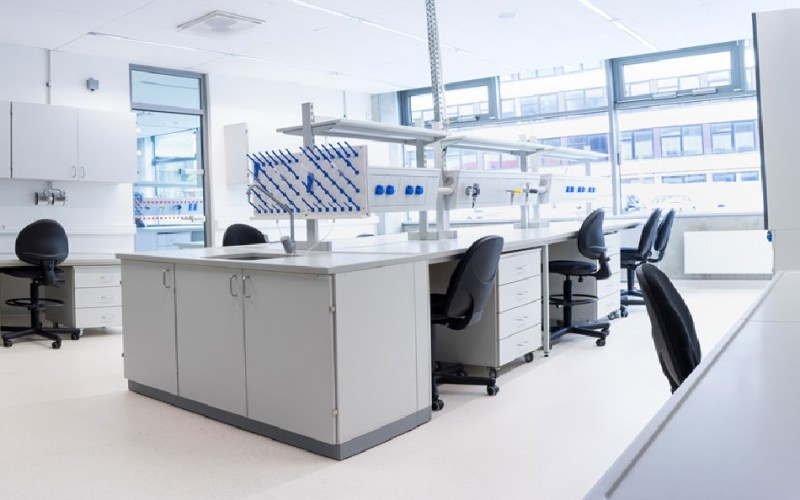
Laboratory furniture encompasses a variety of specialized equipment and fixtures designed to create efficient and safe research and experimentation environments. This includes workbenches, cabinets, storage units, and specialized equipment like fume hoods and emergency safety showers. The furniture is chosen based on factors like functionality, durability, and compatibility with specific research needs, contributing to the overall organization and workflow of the lab.
Key Components of Laboratory Furniture:
Workbenches:
The primary workspace for experiments, available in standard, specialized (e.g., chemical resistant, adjustable height), and specialized types.
Cabinets:
Used for organized storage of equipment, chemicals, and biohazards, including base cabinets, castor wheel cabinets, and suspended cabinets.
Storage Units:
Shelving, cabinets, and specialized storage solutions for samples, chemicals, and other materials.
Specialized Equipment:
Fume hoods for containing hazardous substances, emergency showers and eyewash stations for safety, and balance tables for sensitive equipment.
Other Furniture:
Lab chairs and stools, carts, and modular systems for flexibility and reconfiguration.
Key Considerations when Selecting Laboratory Furniture:
Functionality:
Matching furniture to specific research needs and experimental procedures.
Durability:
Choosing materials that can withstand lab environments and potential hazards.
Safety:
Ensuring that furniture meets safety standards and provides necessary protections like fume hoods and emergency equipment.
Flexibility:
Considering modular systems that can be reconfigured for changing research needs.
Ergonomics:
Choosing furniture that promotes comfortable and efficient working postures.
Hygiene:
Selecting materials and designs that are easy to clean and maintain, particularly in sensitive research areas.
_1753866055.png)