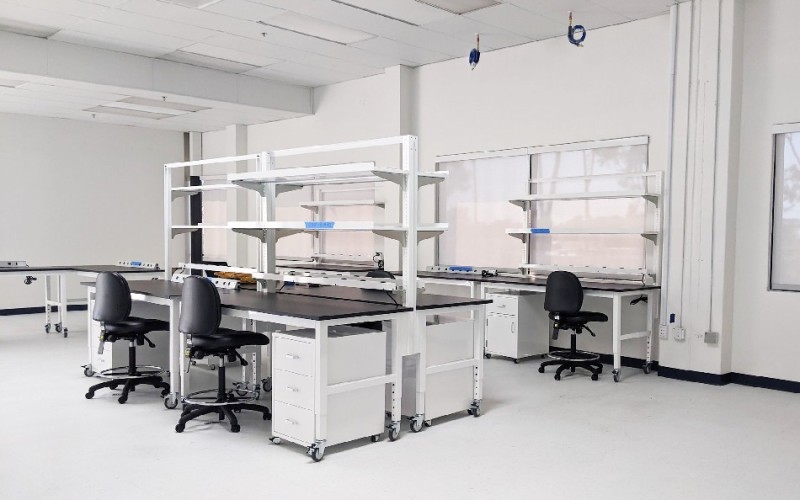
A laboratory workstation, also known as a lab bench or work table, is a specialized piece of furniture designed for scientific experiments, analyses, and other laboratory tasks. These workstations are typically durable, functional, and feature chemical-resistant materials to withstand the demands of a laboratory environment. They provide a stable and organized workspace for researchers, scientists, and students.
Here's a more detailed description:
Key Features:
Durable Construction:
Laboratory workstations are built to withstand the rigors of daily lab use, often using materials like stainless steel, epoxy resin, or phenolic resin.
Chemical Resistance:
The surfaces and materials are chosen for their ability to resist corrosion and damage from various chemicals used in experiments.
Ergonomic Design:
Many workstations are designed with ergonomics in mind, offering features like adjustable height, task lighting, and comfortable seating to reduce fatigue and prevent injuries.
Customizable Configurations:
Workstations can be customized with various accessories like shelves, drawers, and storage cabinets to suit specific needs and workflows.
Integration with Equipment:
Workstations are designed to integrate seamlessly with laboratory equipment, such as microscopes, analyzers, and other instruments.
Space Efficiency:
Workstations can be designed to maximize space utilization, especially in labs with limited square footage.
Types of Workstations:
Laboratory workstations can be categorized based on their placement (central, side, or corner) or the materials used (all-steel, PP, steel-wood, or stainless steel).
Examples of Use:
Medical Laboratories: Art Workstations in medical labs are designed for data analysis, imaging, and medical research, featuring advanced software and integration with diagnostic instruments.
High-Throughput Labs: In high-throughput settings, workstations may include automated liquid handlers and specialized equipment for efficient sample processing.
General Labs: In a standard laboratory setting, workstations are used for a wide range of experiments, requiring ample space for equipment, materials, and experimental setups.
In essence, a laboratory workstation is more than just a table; it's a critical component of a well-equipped and efficient laboratory environment.
_1753866055.png)