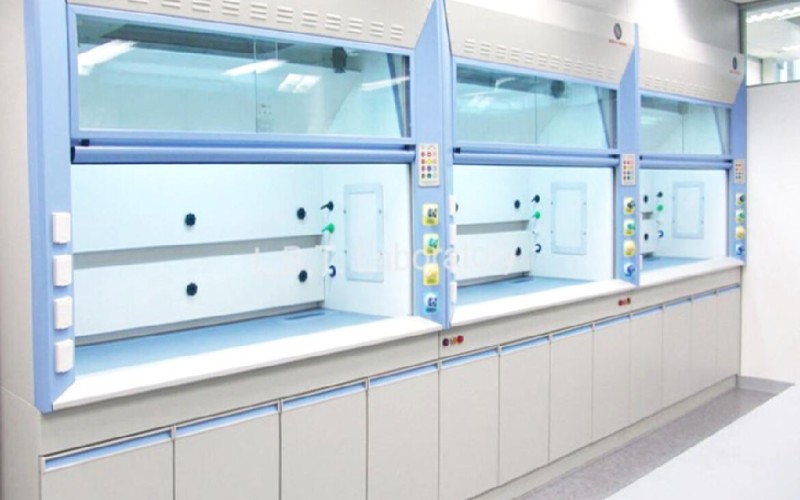
A fume hood is a crucial piece of safety equipment in a laboratory that provides a ventilated enclosure, typically with a sliding sash, to protect users from hazardous fumes, vapors, and particulate matter generated during experiments. It works by drawing air inward, containing the contaminants, and exhausting them outside the laboratory, preventing them from entering the breathing zone of personnel.
Here's a more detailed breakdown:
Purpose:
Containment:
Fume hoods are designed to prevent hazardous substances like fumes, gases, and particulate matter from escaping into the laboratory environment.
Exhaustion:
They incorporate a ventilation system that draws air, along with the contaminants, away from the user and expels it to the outside.
Safety:
Fume hoods protect laboratory personnel from exposure to toxic, flammable, or corrosive chemicals, minimizing the risk of inhalation or skin contact.
Key Features:
Enclosure:
A fume hood is typically an enclosed structure with a sash (sliding window) that provides access to the workspace while maintaining containment.
Ventilation System:
A blower and ductwork are integral to the fume hood, drawing air into the hood and expelling it outside.
Sash:
The sash, often made of safety glass or other transparent materials, can be adjusted to control airflow and create a barrier between the user and the experiment.
Airflow:
Proper airflow is essential for effective containment. Face velocity (the speed of air entering the hood opening) is a critical parameter to ensure that contaminants are captured and not released into the lab.
Materials:
Fume hoods are constructed from materials resistant to the chemicals they will be used with, such as stainless steel, chemical-resistant laminates, or other specialized materials.
How it Works:
1. Contaminant Generation:
Experiments involving hazardous substances are conducted inside the fume hood.
2. Airflow Initiation:
The ventilation system is activated, creating a flow of air into the hood.
3. Containment:
The airflow pulls the generated fumes, gases, or particles into the hood and prevents them from escaping.
4. Exhaustion:
The contaminated air is then ducted out of the laboratory, often to the outside atmosphere.
5. Sash Positioning:
Adjusting the sash height can affect the face velocity of the airflow, optimizing containment and efficiency.
Types of Fume Hoods:
Ducted Fume Hoods:
These hoods are connected to a building's exhaust system and vent directly outside.
Ductless Fume Hoods:
These hoods use filters (often activated carbon) to remove contaminants before recirculating the air back into the lab.
Importance:
Safety:
Fume hoods are vital for protecting lab personnel from hazardous chemical exposures.
Compliance:
Many regulations and standards (e.g., ASHRAE, EN-14175) govern the design and use of fume hoods.
Productivity:
By providing a safe working environment, fume hoods enable researchers to conduct experiments with hazardous materials efficiently and confidently.
_1753866055.png)