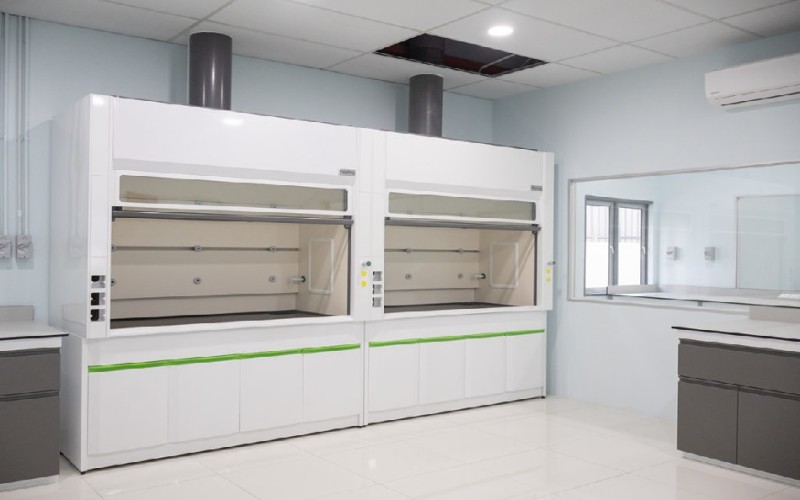
A PP Fume Hood, or Polypropylene Fume Hood, is a laboratory ventilation device made of polypropylene (PP) that protects users from hazardous fumes, vapors, and particulate matter. It's designed for use with corrosive chemicals like acids, alkalis, and solvents, effectively capturing and exhausting dangerous substances.
Polypropylene Fume Hood - PP Fume Hood - Shiv Plast
Here's a more detailed breakdown:
Key Features and Benefits:
Corrosion Resistance:
PP material provides excellent resistance to a wide range of corrosive chemicals, making it suitable for use with acids, alkalis, and solvents.
Containment:
Fume hoods are designed to contain hazardous substances within the hood, preventing them from escaping into the lab environment.
Airflow:
They incorporate a ventilation system that actively draws air and contaminants away from the user and exhausts them safely.
Operator Protection:
By removing potentially harmful fumes, they protect lab personnel from inhaling toxic substances.
Product Protection:
In some cases, fume hoods can also protect experiments or products from contamination by providing a clean, controlled environment.
Reduced Risk of Fire and Explosion:
By removing flammable or explosive vapors, they can help reduce the risk of these incidents.
Various Applications:
PP fume hoods are used in a wide range of applications, including general chemical processes, trace metal analysis, and work with formaldehyde.
Customizable Options:
They can be customized with features like wet scrubbers, HEPA filters, and different types of work surfaces to suit specific needs.
Compliance:
Many PP fume hoods are designed to meet industry standards for containment and airflow, such as ASHRAE Standard 110-1995.
Construction:
Main Body:
Typically made of polypropylene, offering excellent chemical resistance and durability.
Sash:
Often constructed from transparent, shatterproof glass or acrylic, allowing for visibility and safe access to the work area.
Work Surface:
Can be made of various materials like polypropylene, epoxy resin, or ceramic, depending on the application.
Exhaust System:
Includes a fan, ductwork, and sometimes scrubbers or filters to remove and neutralize harmful substances.
In essence, PP fume hoods are a critical piece of safety equipment in laboratories dealing with hazardous chemicals, providing a safe and controlled environment for experiments and processes.
_1753866055.png)